
When the Thinking Brain Goes Quiet: Stress, the Amygdala, and Our Capacity for Choice
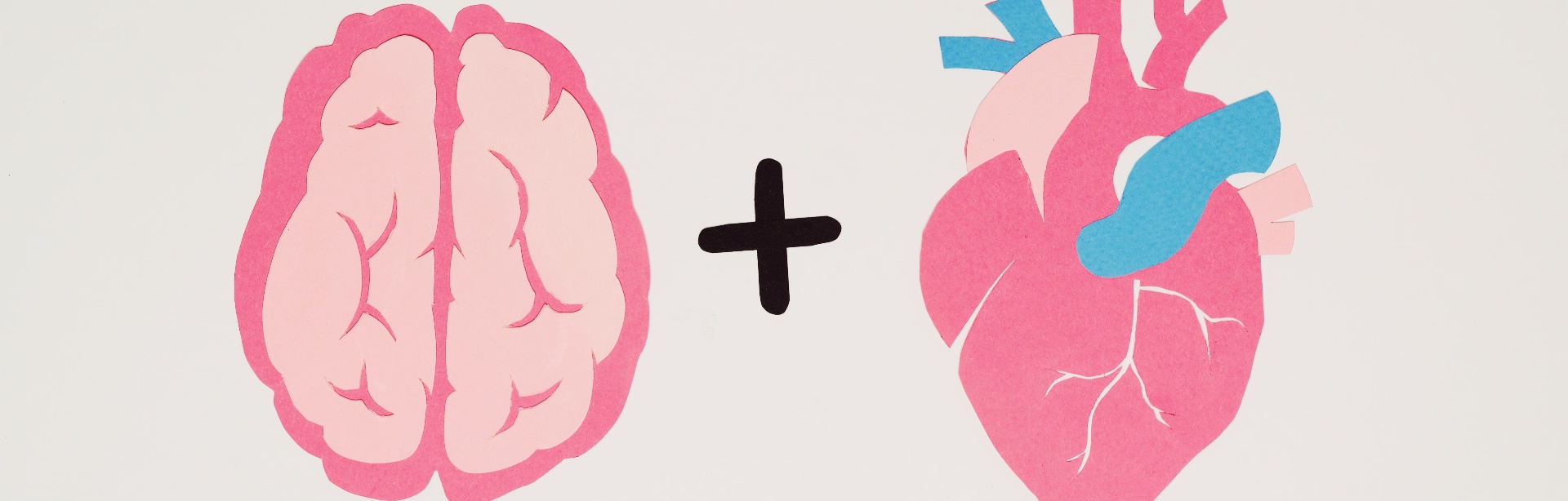
Have you ever looked back at something you did during an intensely emotional moment and thought:
Why did I do that?
Maybe you yelled when you usually communicate calmly.
Maybe you abruptly left a conversation.
Maybe you froze and struggled to find words.
Maybe you agreed to something you later realized you never wanted.
Maybe you became defensive, impulsive, avoidant, or completely overwhelmed.
From the outside, behavior is often interpreted very simply:
You chose to do that.
And technically, behavior still occurred.
But neuroscience gives us a much more interesting question:
How much access did that person have to their usual capacity for thoughtful choice in that moment?
The Prefrontal Cortex: The Brain's Executive System
The prefrontal cortex, located at the front of the brain, plays an important role in many of the higher-order abilities we associate with executive functioning.
These include planning, working memory, attention, cognitive flexibility, inhibition, evaluating consequences, regulating emotion, and using information to guide goal-directed behavior.
In everyday language, these functions give us something incredibly important:
choice.
Imagine becoming angry during an argument.
One part of you may want to immediately say the first thing that comes into your mind.
With sufficient access to executive functioning, another process can occur:
I'm furious.
I know what I want to say.
If I say it that way, this conversation will probably become worse.
What am I actually trying to communicate?
That tiny space between impulse and action contains an enormous amount of neurological work.
Your brain is holding information in mind, inhibiting an immediate response, considering future consequences, evaluating competing possibilities, and selecting behavior based on your larger goals.
That is executive functioning at work.
Then the Brain Detects Threat
Our brains evolved to keep us alive.
When the brain perceives threat, survival becomes a much higher priority than careful deliberation.
The amygdala is one important part of the neural circuitry involved in detecting emotionally significant information, learning about threat, and coordinating responses with other regions of the brain and body.
When a situation is perceived as threatening, the sympathetic nervous system can become activated. Stress hormones and neurotransmitters help prepare the body to respond rapidly.
Heart rate may increase.
Muscles may tense.
Breathing may change.
Attention may narrow.
The body begins preparing for action.
This is incredibly useful if you are facing immediate physical danger.
Careful philosophical reflection would be remarkably inconvenient while something is chasing you.
The brain needs speed.
What Happens to the Prefrontal Cortex Under Stress?
Here is where things become especially interesting.
Under sufficiently intense acute stress, the neural networks supporting prefrontal functioning can become less effective.
Working memory can become impaired.
Cognitive flexibility can decrease.
Our ability to hold multiple perspectives in mind can become more difficult.
Goal-directed, reflective processing can give way to faster, more reactive forms of responding.
Researchers studying stress and the brain have described this as a shift from reflective to reflexive control.
This is what I often mean when I tell clients that the frontal part of the brain can temporarily "go offline."
The prefrontal cortex remains physically present and active. The phrase is shorthand for something more nuanced: the brain has temporarily reduced access to some of the higher-order executive functions that help us pause, evaluate, regulate, and choose among multiple responses.
At the same time, stress can strengthen activity in neural systems involved in emotional salience, threat responding, and habitual behavior, including the amygdala and striatum.
The brain begins prioritizing:
Respond quickly. Protect yourself. Use what has worked before.
The Amygdala Is Doing Its Job
The amygdala frequently gets cast as the villain of popular neuroscience.
It deserves a better publicist.
The amygdala plays an essential role in helping us identify emotionally significant information and respond to potential threats. It also contributes to emotional learning, attention, memory, and decision-making.
Its job is different from the reflective executive functions heavily supported by the prefrontal cortex.
During heightened threat, behavior may therefore become increasingly influenced by emotional salience, learned associations, automatic responses, and established habits.
If previous experiences taught someone that conflict leads to danger, their nervous system may rapidly mobilize during disagreement.
If someone learned that becoming quiet helped preserve safety, freezing or shutting down may emerge quickly.
If leaving reduced danger in the past, escape may become highly accessible.
If fighting back created protection, anger and confrontation may appear before reflective thought catches up.
These responses can happen incredibly quickly.
So Did They "Choose" Their Behavior?
This is where neuroscience complicates our everyday understanding of choice.
Human behavior exists on more of a continuum than the simple categories of choice versus no choice suggest.
When we are regulated, we generally have greater access to the cognitive resources that allow us to consider possibilities, inhibit impulses, anticipate consequences, and act according to our values and long-term goals.
As physiological arousal increases, that field of available responses may begin to narrow.
At very high levels of activation, behavior can become increasingly automatic, habitual, defensive, or reflexive.
The person still has a brain making decisions.
But the neurological conditions under which those decisions are occurring have changed.
Imagine choosing from a menu containing twenty options.
Now imagine choosing from a menu containing three.
A choice technically remains.
The range of accessible choices has changed dramatically.
That distinction matters.
Why Behavior Can Look So Different From the Outside
Other people only see the final behavior.
They see someone yell.
Leave.
Freeze.
Cry.
Shut down.
Become defensive.
Agree immediately.
Push someone away.
Say something impulsively.
They see the output.
They rarely see the nervous system state producing it.
From the outside, it can look deliberate.
From the inside, the experience may have felt astonishingly fast:
Something happened → my body reacted → I acted.
Sometimes the person's reflective understanding arrives afterward.
I wish I had handled that differently.
Why couldn't I think?
Why couldn't I find the words?
Why did I agree when I wanted to say no?
Why did I react so strongly?
The answer may involve far more than personality, intention, or willpower.
It may involve the state of the nervous system at the moment the behavior occurred.
Understanding the Brain Does More Than Excuse Behavior
Understanding this process adds context and creates possibilities for change.
Accountability still matters.
Impact still matters.
Repair still matters.
And neuroscience can help us understand why telling someone to "make better choices" may accomplish very little if their nervous system repeatedly reaches a state where access to reflective choice becomes dramatically reduced.
The more useful question becomes:
How do we help the brain regain access to choice?
Regulation Expands the Menu
This is one reason nervous-system regulation matters in psychotherapy.
The goal goes beyond simply becoming calm.
Regulation can help restore access to the cognitive resources needed for flexible, intentional behavior.
As arousal becomes more manageable, a person may regain greater access to working memory, perspective-taking, inhibition, planning, language, and cognitive flexibility.
The menu begins expanding again.
Instead of:
Fight.
There may eventually be:
I can tell them I'm angry.
I can ask for space.
I can stay in the conversation.
I can set a boundary.
I can revisit this later.
Instead of:
Run.
There may be:
I can pause.
I can ask myself what feels threatening.
I can decide whether I genuinely need to leave.
Instead of:
Freeze.
There may be:
I need a moment to find my words.
I can tell the other person I'm overwhelmed.
I can orient myself to the present.
This is where regulation creates something profoundly important:
more access to choice.
The Goal Is Greater Flexibility
A healthy nervous system still has fight, flight, freeze, and other defensive responses available.
Those responses exist for good reason.
The goal is greater flexibility: the ability to respond to the situation that is actually happening rather than automatically responding from a state of perceived threat.
Over time, psychotherapy can help people recognize activation earlier, understand their patterns, increase their capacity to remain present with difficult emotions, regulate physiological arousal, and practice different responses while greater executive functioning remains accessible.
Eventually, something that once happened automatically may contain a new moment:
Wait.
And inside that moment lives possibility.
The possibility to pause.
To notice.
To evaluate.
To communicate.
To choose differently.
Sometimes one of the most meaningful signs of healing is simply discovering that where there once seemed to be only one possible response, there are now several.
That is what greater regulation can give us: a wider range of choices about what happens next.